
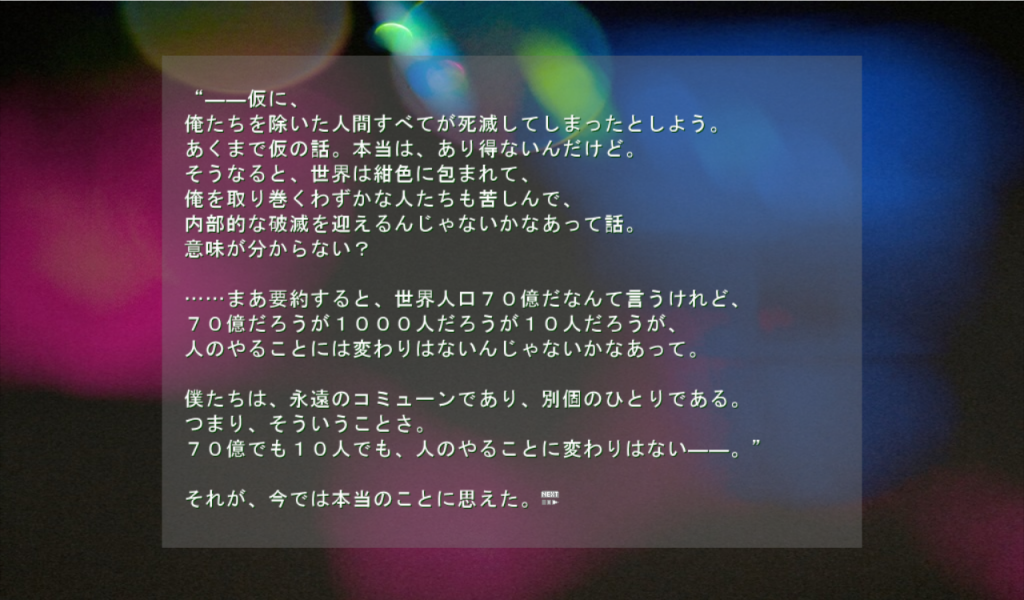
5, 10, 50, 100, a million — no matter how numerous we may be, the core of our actions stays virtually the same. There is a disconnection between our lives and the greater world. We may be 7 billion, but the core of our lives only revolves around a few select individuals, with a sense of the world only brought by media and factual information disconnected from our actual perception.
Have you ever slept outside with friends on a fresh summer night, felt a disconnection between yourself and the rest of the world, a strange feeling of solitude creeping in despite the unusual excitement, until only silence remains and you’re left wondering about your relationship with life and the world?
Probably not. But these are the sorts of feelings that Transit – An Extrasolar Human tries to capture. We follow the lives of a small subset of students at the Third School of Mitsuba, focusing on Nanahara Miyabi, the protagonist. Every student has an “Introspection Factor,” affected by their mental states and social interactions. If it falls too low, it can lead to insanity, suicide, or murder (think Psycho-Pass). This makes characters more averse to social interactions and careful not to express their feelings, up to a certain point. The plot is largely character-centered; big developments occur in small bursts that shift the story’s focus.
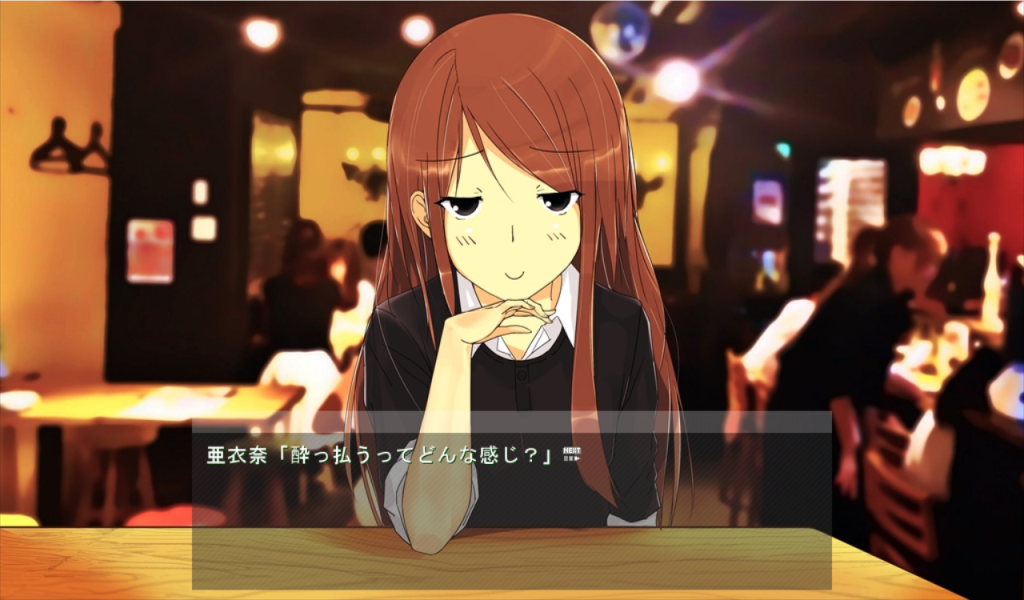
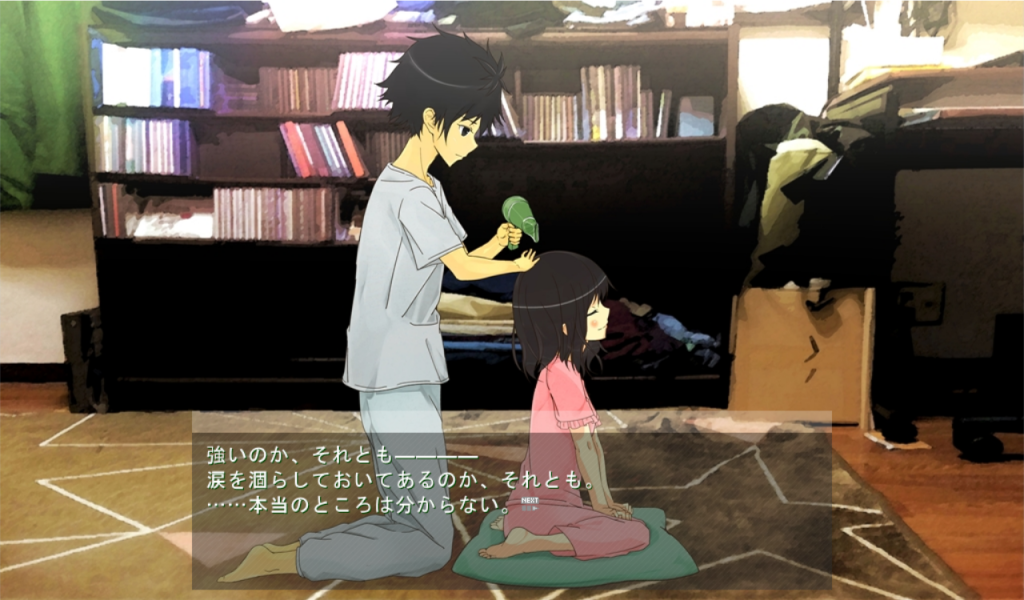
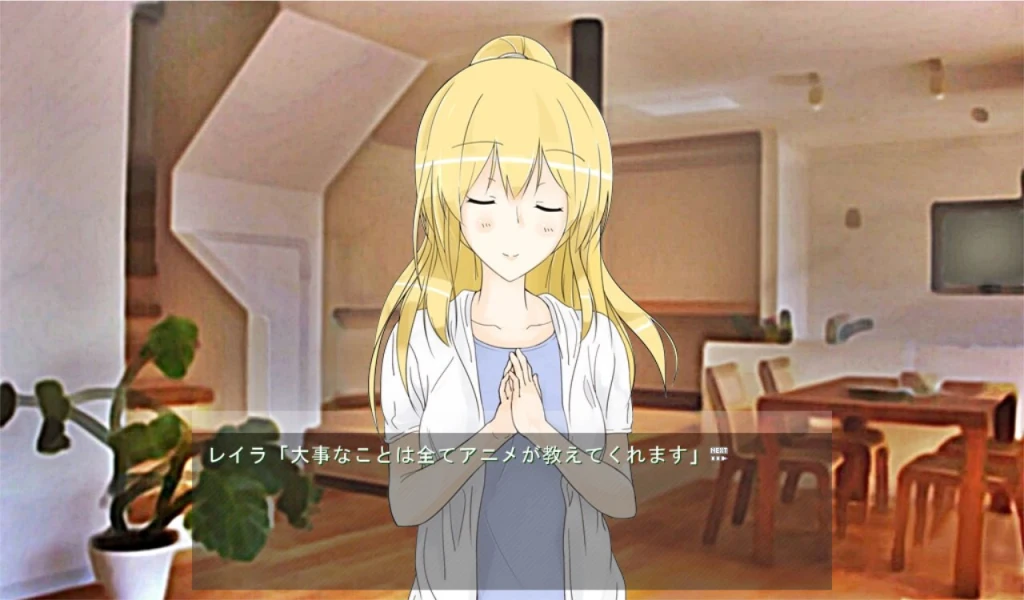
Characters
The game’s strength lies in its characters. All are very likable and suffer from issues directly relating to the main themes. Each character gets one or two climax moments to resolve their arc.
However, midway through the story, a significant plot twist drastically shifts the narrative’s direction. While this could have been an opportunity to bring together all character arcs in a satisfying finale, it instead slows the pacing and handles important developments off-screen. Many events could have occurred without the twist, rendering it somewhat irrelevant. Side routes (~40 mins each) are fun, but the main story never fully comes together.
One notable example is Leila, an American non-Japanese speaking girl who gradually learns Japanese. Her arc could have been a compelling contrast to the themes of disconnection, but it doesn’t reach a satisfying conclusion, despite her introduction in the first scene.
Transit is an interesting game with cool moments, but its pacing and lack of focus in the second half prevent it from being fully memorable. The author shows potential, and improvements in story construction and pacing could result in a very strong future release.