
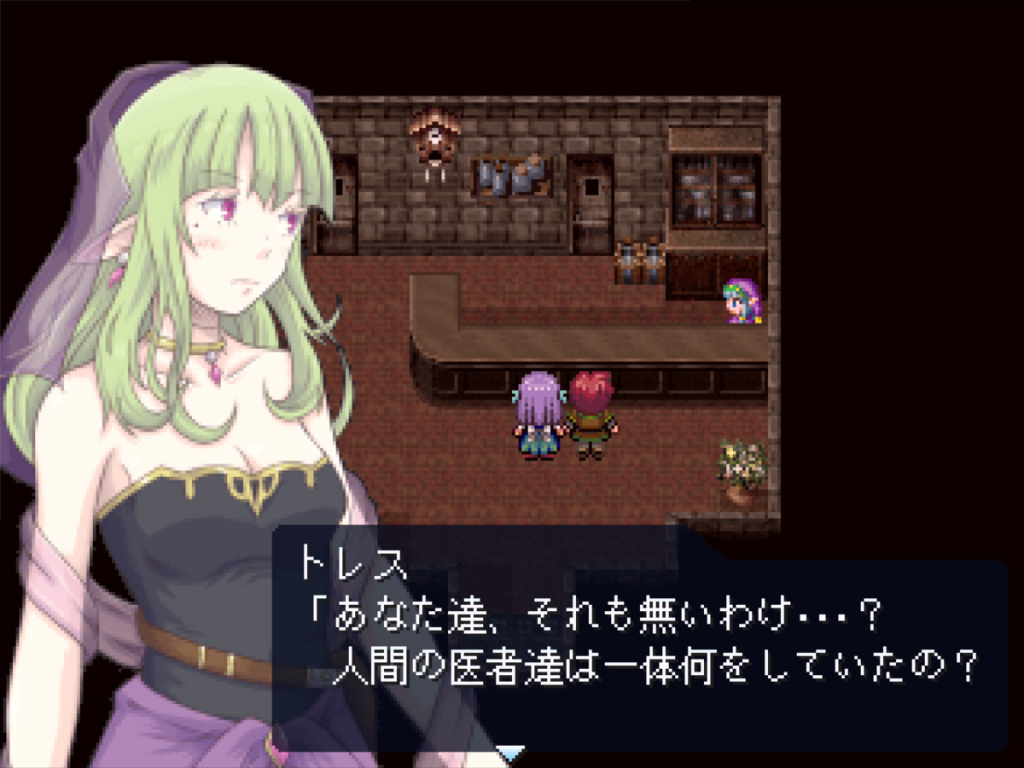
Many people come here: travellers, runaways, soldiers and very rarely…witches. I like to drink, talk, laugh and cry with my customers. After our drinks, most of them leave, never to be seen again. That’s especially why I want to spend those precious minutes with them. I would like for this place to become the home of their heart, the place where they can go home and rest when their hearts are tired. Inaccessible to others, their one truly special place….Customer, would you like to have a drink ?
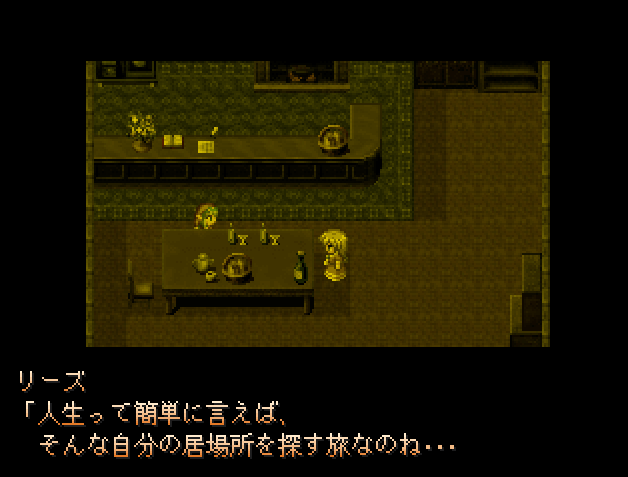
A few months ago, I finished Word Piece and Peace (WPP). The game has stuck with me and I still think about parts of it daily. Despite how much I enjoyed it, the game remains hard to recommend for many reasons.
For context, WPP is a furige fully written and realized by TFTA (also known for Time Logic, Egg Heart, and Lilian Kuu). Published in 2016, it’s dense, spanning over 70 hours of content without filler, and well-known in the community.
The game is set in a world of humans and witches, the latter being secluded from human society after a long-ended war. We follow Tress, a witch specializing in medicinal herbs, living at the border between the human and witch worlds. She sells to anyone regardless of race, hoping to foster understanding. Upon discovering the schemes of Burhalista, ruler of the witches’ world, she sets out to warn her human friend Lize of the impending danger.
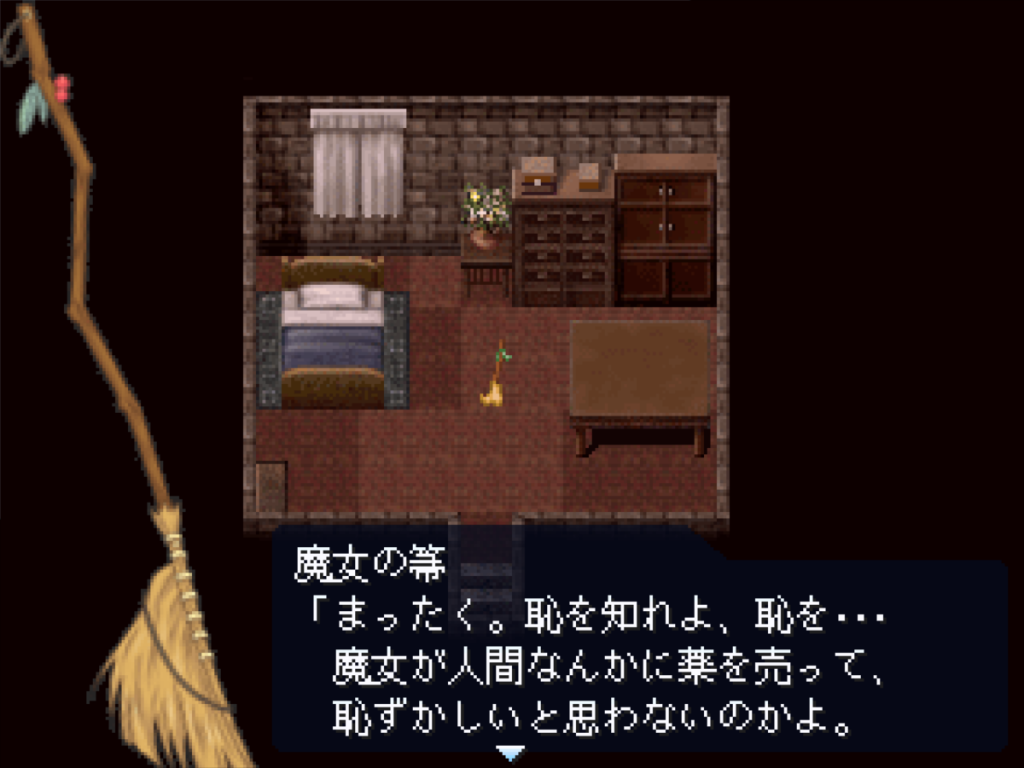
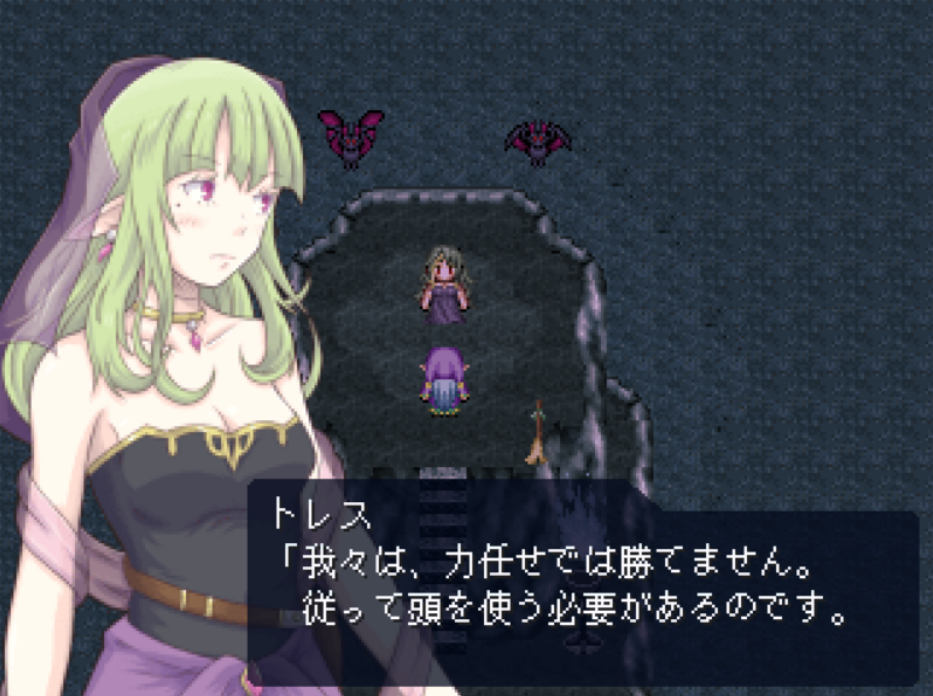
Joined by a broom who cannot fly—appropriately named Broom—and a bat named Crow, Tress embarks on a journey that rapidly expands in scope, introducing over 50 characters and spanning the entire world.
Gameplay
The game features three distinct gameplay systems:
- Turn-based RPG: Progression uses ICS (Irregular, Cards, Skill). Actions can trigger bonus turns, forcing players to adapt strategies.
- SRPG battles: Story-driven encounters with fixed characters. Challenging for newcomers but memorable.
- ARPG sections: Impressive for RPG2K, with minor issues like respawning enemies and labyrinthine maps. Offers a fun break from other systems.
A dungeon skip option allows players to bypass nearly all gameplay, leaving only scaled boss battles.
Many dialogues span hours. The narrative is heavy, often with one character speaking while others listen. The world is soul-crushingly dark, full of despair, pain, and sadness, with no comedic relief. The story connects every character, linking pasts and backstories in surprising ways, delivering frequent “oh shit” moments.
The four main antagonists are comically evil, while many other characters commit morally dubious acts. The game portrays humanity’s horrors alongside paths for redemption. Even imperfect characters attempt to do good, leaving a lasting emotional impact on the player.
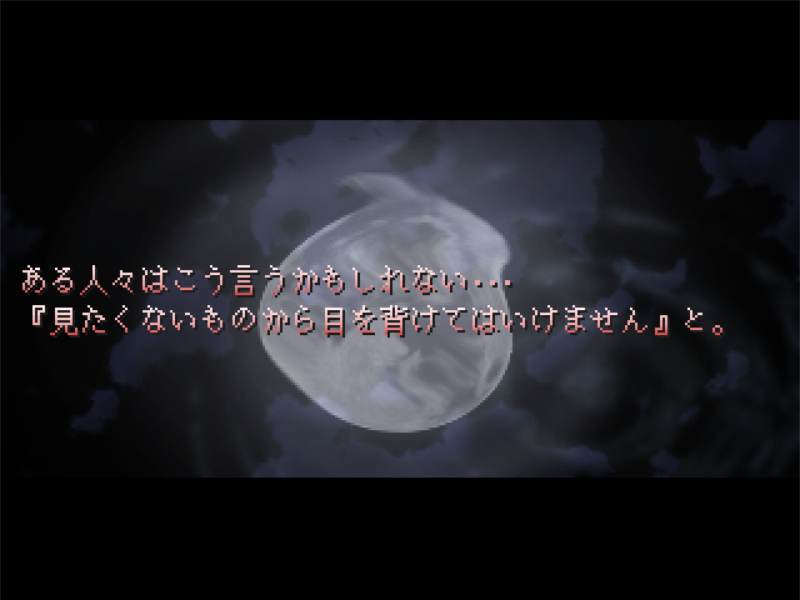
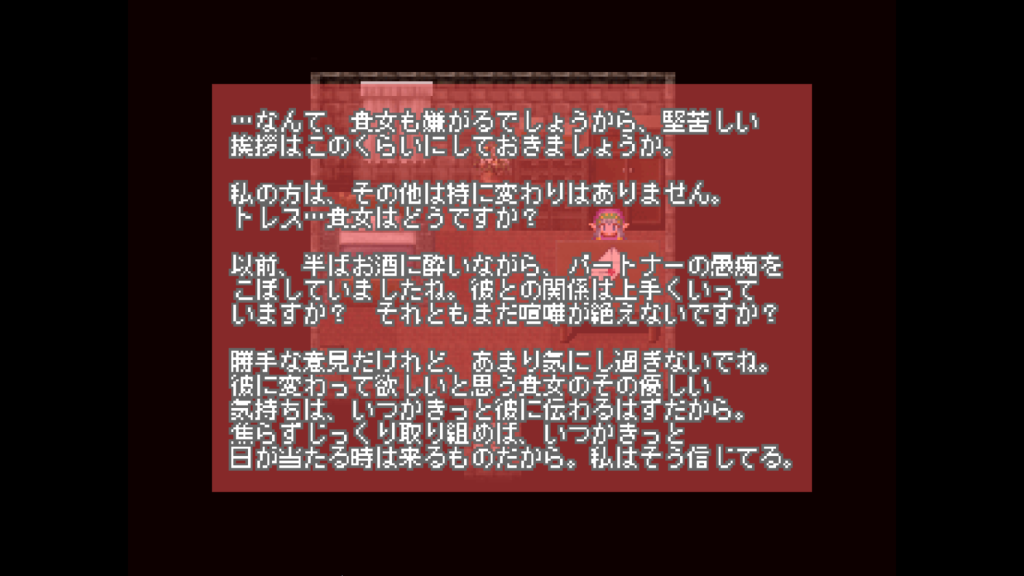
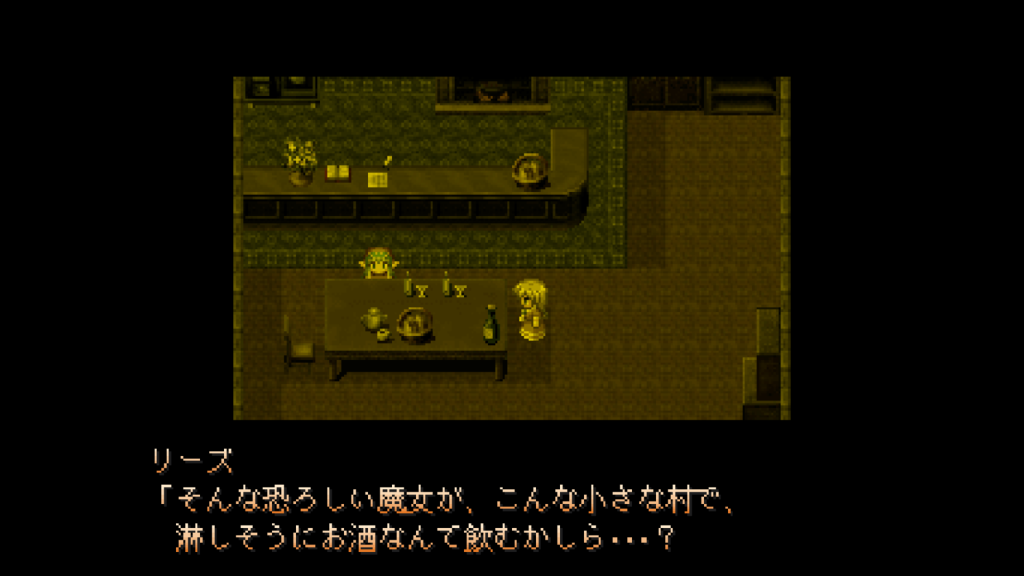
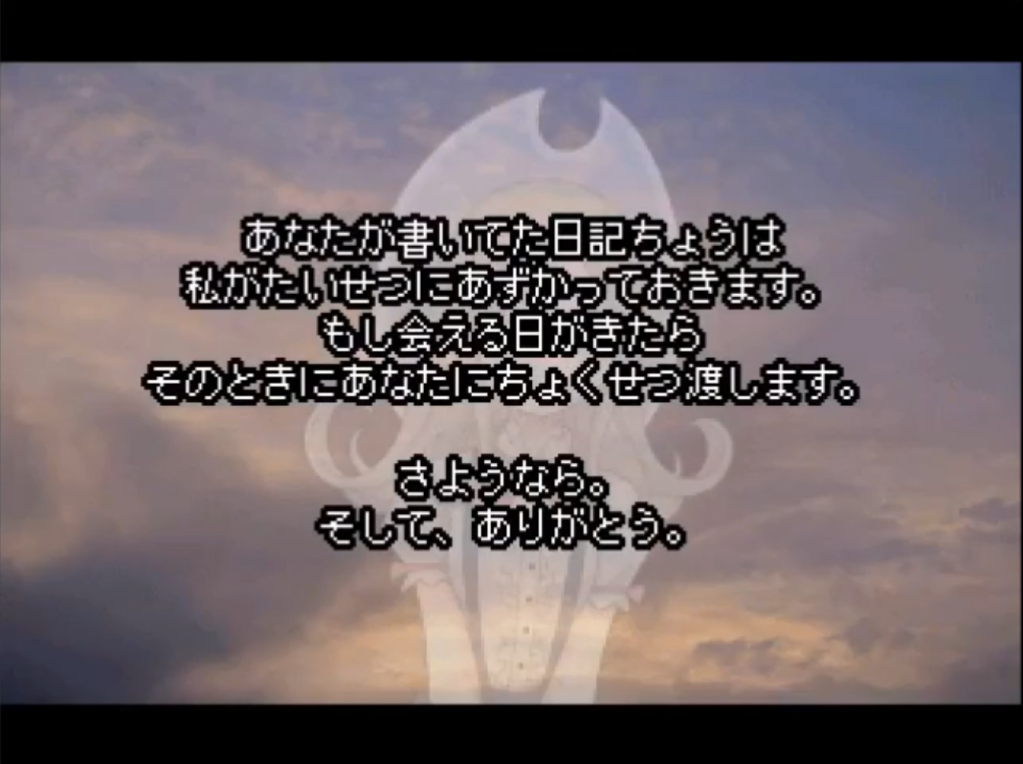
The presentation is polished: sprites are detailed, maps well-designed, and music is generally effective. Narration styles change, enhancing immersion, and color-coded text gives each character a distinct presence. Some minor design quirks exist (e.g., looping music), but these rarely detract.
Conclusion
I may sound overly positive, but the game’s story structure and overarching themes are some of my favorites. Many elements may put new players off, and chapter 10 usually reveals if it’s a good fit.
The experience is unforgettable, and I would play it again only once the remake project is complete.